Kazakhstan Food: What to Eat, Why It Matters, What to Expect
Пост обновлен 22.02.2026
Автор статьи: Daniyar Abdi | LinkedIn
Kazakhstan food is shaped by the steppe, nomadic life, and hospitality. You will see meat, dairy, wheat dough, and strong tea. You will also notice a “share-first” table culture. This guide explains the staples, the why behind them, and how to order confidently.
What defines Kazakhstan food in one sentence?
Kazakhstan food is a high-hospitality cuisine built around boiled and preserved meats, hearty dough, and fermented dairy, designed for long travel and tough climates.
That pattern is not random. Historically, mobile pastoral life favored foods that were filling, shareable, and easy to preserve. Meat and dairy became central.
Why is meat so prominent?
Meat is prominent because it matched the livestock economy and the practical needs of life on the steppe: high calories, easy preservation, and communal serving traditions.
Modern stats still reflect this preference. In Q2 2025, average consumption was reported as 20.6 kg of meat and meat products per person (quarterly figure), with beef leading and horse meat remaining meaningful.
Stat snapshot (reported for Q2 2025):
- Beef: 6.3 kg/person
- Horse meat: 1.5 kg/person
- Mutton: 1.3 kg/person
- Chicken: 1.3 kg/person
- Pork: 0.815 kg/person
(Figures vary by methodology and period, but the direction is consistent: meat is central.)
What is the #1 must-try dish?

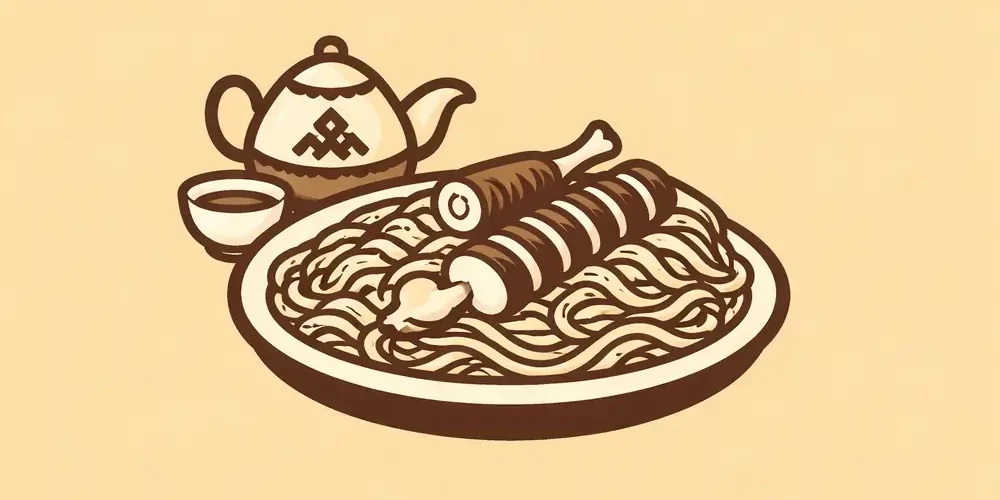
Beshbarmak is the signature. It is boiled meat served with noodles and onion sauce, traditionally eaten by hand. The name is commonly explained as “five fingers.”
You may see it with:
- horse, lamb, or beef (varies by region and modern availability)
- a broth served before or alongside
- a serving ritual where specific cuts go to specific guests
Which other dishes should beginners recognize?
These are the “menu anchors” that make ordering simple:
| Dish / item | What it is | What it tastes like | When you’ll see it |
|---|---|---|---|
| Beshbarmak | Boiled meat + noodles + onion sauce | Rich, savory, broth-forward | Celebrations, traditional restaurants |
| Manty | Large steamed dumplings (often meat) | Juicy, peppery, comforting | Cafes, family meals |
| Lagman | Noodles with meat/veg sauce (Central Asian influence) | Spiced, aromatic | Casual eateries |
| Plov (pilaf) | Rice cooked with meat and carrots | Deeply savory | Shared meals, street food |
| Shashlik | Grilled skewers | Smoky, fatty, direct | Markets, outdoor grills |
| Baursak | Fried dough bites | Soft, slightly sweet/savory | Tea tables, holidays |
| Kurt | Dried salty dairy curds | Very salty, tangy | Snacks, travel food |
| Kazy / qazi | Horsemeat sausage (rib meat + fat) | Dense, rich, “festive” | Celebrations, special platters |
For kazy, multiple sources describe it as a traditional horsemeat sausage strongly tied to celebratory meals and steppe heritage.
What are the key drinks, and are they alcoholic?
Traditional drinks often come from milk fermentation. Alcohol content can be low but non-zero depending on fermentation time and method, so you should ask if you avoid alcohol.
| Drink | Base | Typical profile | Notes |
|---|---|---|---|
| Kumis (koumiss) | Mare’s milk | Tangy, lightly fizzy | Fermented; composition varies by process; studied in food science |
| Shubat | Camel milk | Creamier, sour, dense | Fermented; reviews report wide variation in nutrients by season/region |
| Ayran / katyk | Cow milk / yogurt style | Salty-sour, refreshing | Often non-alcoholic; still ask if house-fermented |
| Tea | Black tea common | Strong, often with milk | Social default beverage |
Safety note: If a dairy drink is homemade or sold in informal settings, ask about pasteurization and freshness. People with lactose intolerance or milk allergy should be careful.
What is “dastarkhan,” and why does it matter?
Dastarkhan is the shared table setting and hosting tradition. You do not just “eat.” You participate.
Practical expectations:
- The host may offer prime cuts to honor guests (especially elders).
- Food often arrives in large shared plates.
- Tea service can be continuous.
If you want to be respectful, accept at least a small portion, then pace yourself.
How does Kazakhstan mix nomadic roots with modern city eating?
Modern Kazakhstan blends:
- traditional Kazakh staples (beshbarmak, kazy, baursak)
- Central Asian neighbors’ classics (lagman, plov)
- café culture in cities like Almaty and Astana
You can often find:
- traditional restaurants that stage “heritage” plating
- canteens and bazaars where food is simpler and cheaper
- modern coffee shops growing alongside a tea-first culture
Stat snapshot (reported for 2024 beverage trend): one report noted black tea at ~1.3 kg per person versus instant coffee at ~291 g, with tea declining and coffee rising year-over-year.
How does the UNESCO holiday context show up in food?
The spring holiday Nowruz (Nauryz) has a signature dish: Nauryz kozhe, described as a dish with seven componentssymbolizing elements of life. UNESCO documentation and related materials describe the “seven ingredients” concept clearly.
This matters because it shows a core pattern in Kazakhstan food: symbolism plus practicality. A big shared pot signals unity, and the ingredients are basic, nourishing staples.
Checklist: how to try Kazakhstan food like a pro
- Ask what meat is used (horse, lamb, beef can all appear).
- Ask if fermented drinks have any alcohol.
- Confirm pasteurization for dairy if you are cautious or immunocompromised.
- Start with shared plates, then order one “anchor” dish (beshbarmak or manty).
- Pair heavy meals with tea, not sugary drinks, to keep it balanced.
- Expect generous portions. Order less, add later.
- Respect the host’s serving order and elder-first customs.
- If you have allergies, state them directly and early.
FAQ
Beshbarmak. It is the national-style centerpiece and explains the cuisine fast.
Usually not very spicy. It is more about broth, fat, salt, and slow-cooked flavor.
Yes. It is culturally normal and appears in dishes like kazy sausage and some beshbarmak versions.
It can contain small amounts of alcohol from fermentation. Ask the server if you avoid alcohol.
Tea is the default social drink in many settings.
Glossary
- Beshbarmak — boiled meat with noodles, served as a shared platter.
- Dastarkhan — the shared table setting and hosting culture.
- Kazy (qazi) — traditional horsemeat sausage, often festive.
- Kumis (koumiss) — fermented mare’s milk drink.
- Shubat — fermented camel milk drink; composition varies widely.
- Baursak — fried dough pieces served with tea.
- Kurt — dried salty dairy curds for storage and travel.
- Nauryz kozhe — Nowruz/Nauryz festive dish with symbolic seven ingredients.
Conclusion
Kazakhstan food is straightforward, filling, and deeply social. Learn a few anchor dishes, ask the right questions, and the cuisine becomes easy to enjoy.
Sources used (no active links)
- UNESCO ICH document on Nauryz (PDF), 2015: https://ich.unesco.org/doc/src/30760.pdf
- UNESCO-related Nauryz/kozhe description (PDF), ~2015: https://ich.unesco.org/doc/src/32306.pdf
- Foods (MDPI) review on koumiss, 2025: https://www.mdpi.com/2304-8158/14/22/3954
- NIH/PMC review mentioning shubat composition ranges, 2024: https://pmc.ncbi.nlm.nih.gov/articles/PMC11240983/
- NIH/PMC koumiss review (note: contains health-leaning language; interpret cautiously), 2021: https://pmc.ncbi.nlm.nih.gov/articles/PMC8565204/
- Energyprom meat consumption report (Kazakhstan), 2025: https://energyprom.kz/en/articles-en/kazakhstans-citizens-are-meat-lovers-meat-and-meat-product-consumption-up-by-2/
- Kursiv report citing Energyprom beverage stats (tea vs coffee), 2025: https://kz.kursiv.media/en/2025-07-04/engk-yeri-is-starbucks-sulture-sonquering-tea-loving-kazakhstan/
- Wikipedia overview for beshbarmak (background + serving ritual), accessed 2026: https://en.wikipedia.org/wiki/Beshbarmak
- El País feature on kazy sausage cultural role, 2025: https://elpais.com/gastronomia/2025-05-12/kazy-la-salchicha-de-carne-y-grasa-de-caballo-que-hace-ganar-medallas-olimpicas.html
Читать другие статьи из категории: Туризм.
- Индекс массы тела калькулятор: что показывает цифра и как ею пользоваться с умом
- Карта Казахстана, которая действительно помогает
- Kazakhstan Food: What to Eat, Why It Matters, What to Expect
- Как избавиться от перхоти и вернуть чистую кожу головы
- Почему поднимается давление: что это значит и откуда берётся